Integrity Garage Door Repair
The Most Trusted and Experienced Name for Garage Door Repair and Replacement in Portsmouth!
- Same Day Service
- Licensed & Insured
request a service
Trusted Garage Door Technicians
⭐⭐⭐⭐⭐
Google Customer Reviews
Fixing a Garage Door Opener That Reversed But Wouldn’t Close: A Real-Life Repair Story
At Integrity Garage Door Repair, we’ve seen just about client in Portsmouth called us with an issue that had them stumped, we knew this one needed a closer look. Their garage door would start to close but then reverse direction midway, refusing to close completely. This is a common problem with garage door openers, but the solution often depends on the specifics of the situation.
Understanding the Problem
When a garage door reverses before fully closing, it’s typically a safety feature kicking in. Modern garage door openers are equipped with sensors that detect obstacles in the path of the door. If anything is in the way, or if the sensors believe there’s something in the way, the door will reverse to prevent damage or injury.
But what happens when there’s no visible obstruction, yet the door still won’t close? That’s exactly the issue our client, Mr. Johnson, was dealing with. He checked the path, cleaned the sensors, and even reset the opener, but nothing seemed to work. This situation can be frustrating, especially when you rely on your garage door daily.
Step 1: Inspect the Sensors
The first step in solving this problem was to inspect the safety sensors. These sensors are located near the bottom of the garage door tracks, one on each side. They communicate with each other using an invisible beam. If anything interrupts this beam, the door will reverse.
When we arrived at Mr. Johnson’s house, we checked the sensors to ensure they were properly aligned. Sometimes, a slight bump or even extreme weather conditions can knock them out of alignment, causing the door to reverse. In this case, the sensors were slightly misaligned, which we quickly corrected.
However, even after aligning the sensors, the door still wouldn’t close. This told us there was more to the problem.
Step 2: Check for Obstructions
Next, we checked for any obstructions along the door’s path. Small objects, debris, or even dirt on the sensors can cause the door to malfunction. After thoroughly cleaning the sensors and ensuring the path was clear, we tested the door again. Unfortunately, the door still reversed before closing.
At this point, we needed to dig deeper.
Step 3: Test the Force Settings
Garage door openers have force settings that control how much power is used to open and close the door. If the force setting is too low, the opener may interpret even slight resistance as an obstruction, causing the door to reverse.
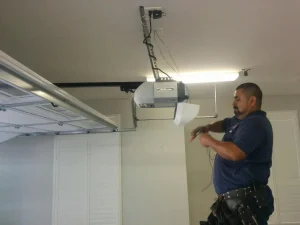
We adjusted the force settings on Mr. Johnson’s opener. This is done by turning the force adjustment knobs, usually found on the back or side of the opener unit. We increased the closing force slightly and tested the door again. This time, the door closed all the way without reversing.
However, it’s important not to set the force too high, as this can create a safety hazard. The door should stop and reverse if it encounters a real obstruction.
Step 4: Examine the Tracks and Rollers
The door was now closing, but we wanted to ensure there wouldn’t be any future problems. We inspected the tracks and rollers for any signs of damage or wear. Bent tracks or worn-out rollers can create resistance, making it harder for the door to close smoothly. Everything looked good, so we applied some lubricant to ensure the door operated smoothly.
Step 5: Check the Opener's Travel Limits
Finally, we checked the travel limits on the garage door opener. These limits tell the opener how far the door should travel when opening and closing. If the limits are set incorrectly, the door might think it has hit an obstacle and reverse.
We fine-tuned the travel limits to ensure the door stopped exactly where it should, without reversing. This adjustment is typically done using the limit adjustment screws on the opener unit.
A Satisfied Customer
After completing these steps, Mr. Johnson’s garage door was back to working perfectly. It closed smoothly without reversing, and the sensors were functioning as they should. He was relieved to have the issue resolved, knowing that his garage door was now safe and reliable.
At Integrity Garage Door Repair, we take pride in helping our clients in Portsmouth with all their garage door needs. Whether it’s a simple sensor adjustment or a more complex issue like Mr. Johnson’s, we’re here to ensure your garage door operates smoothly and safely.
Conclusion
A garage door that reverses before closing can be a frustrating and potentially dangerous problem. However, with the right approach and attention to detail, it’s usually a straightforward issue to fix. At Integrity Garage Door Repair, we’re committed to helping our clients in Portsmouth with all their garage door needs, ensuring their doors operate safely and efficiently.
If you’re experiencing similar issues with your garage door, don’t hesitate to reach out. We’re here to help you get your garage door back on track—literally!
FAQs
The most common reason a garage door reverses before closing is a problem with the safety sensors. These sensors are designed to detect obstacles in the path of the door. If the sensors are misaligned, dirty, or obstructed, the door may reverse to prevent damage or injury. Other potential issues include incorrect force settings, obstructions in the door’s path, or problems with the tracks and rollers.
Regular maintenance is key to preventing your garage door from reversing unexpectedly. Ensure that the safety sensors are clean and aligned, the tracks and rollers are in good condition, and the force settings are properly adjusted. If you’re experiencing frequent issues, it’s a good idea to have a professional inspect your garage door system to identify and fix any underlying problems.